

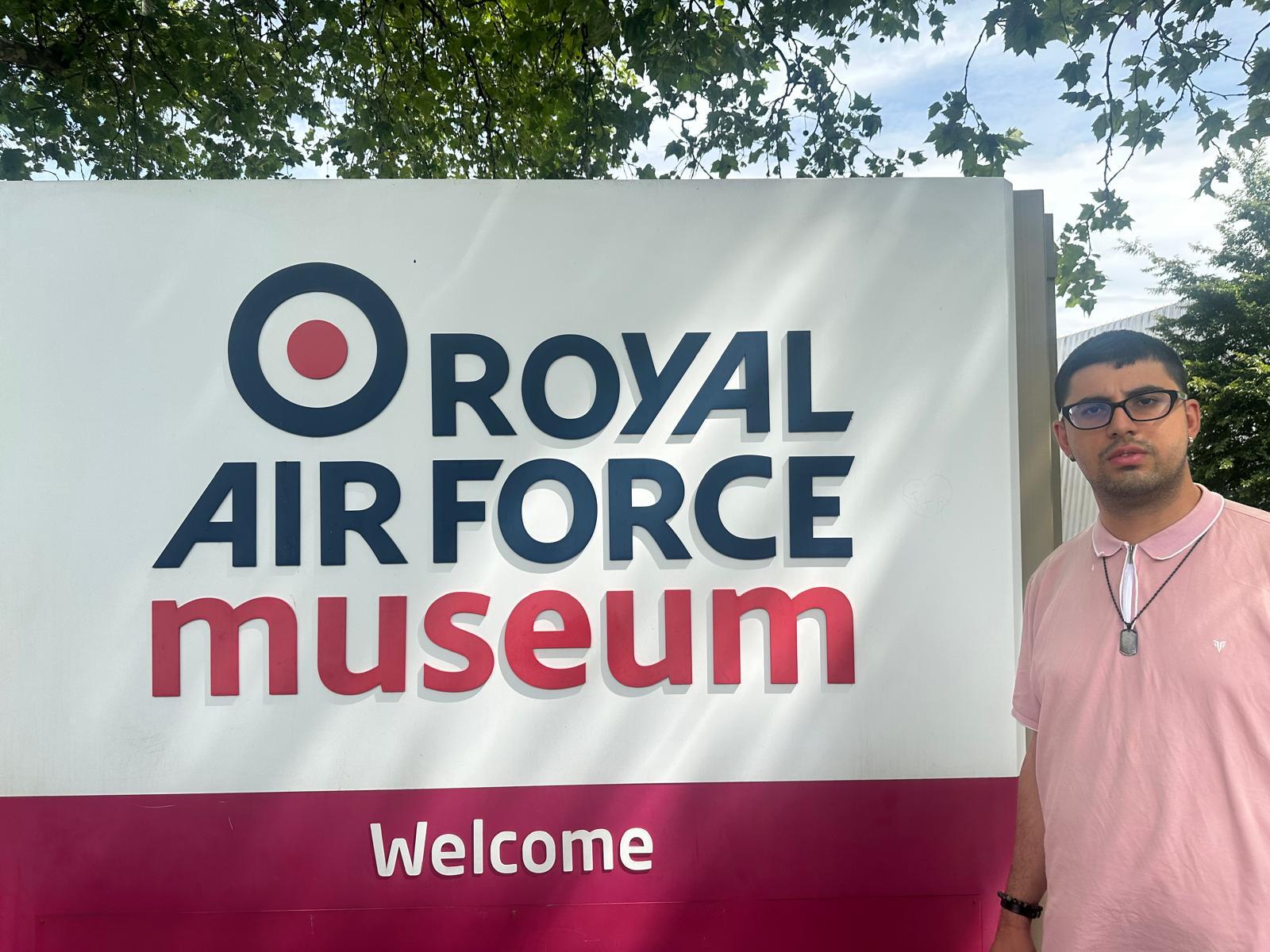
This day I was so excited and surprised. I was so happy. I just walked to the Royal Air Force Museum by feet. This was so hilarious and dazzling museum I have ever seen. It includes 6 hangars. In the hangars there were so many war jets, war planes and war gliders. I saw most importance and memorable planes and some clothes,equipments and war telephone,radar. Captain and soldier clothes, helmets, glasses are exhibiting in the last hangar. There was a mini history game in the last hangar. There were some hats and badges in the upper exhibition glass part.

This was the old yellow defense helicopter. This was used in war defense and attacks. And also rescue some people via stretching ropes. British army forces love and brast this helicopter, because this is so favourable and useful.
The Royal Air Force Museum London is a national museum dedicated to the history of the RAF, aviation, and the role of air power in Britain’s past. RAF Museum+1
The museum is free to enter, open daily (with some variation by hangar). RAF Museum
It’s built on the site of the former Hendon Aerodrome, which has a rich aviation history: originally a civilian airfield, later an RAF station.
The museum officially opened on 15 November 1972, with Queen Elizabeth II presiding at the opening. Wikipedia+1
At its opening, the hangars held 36 aircraft, but over time the collection has grown a lot. Wikipedia
Today, the collection includes around 130 aircraft. Wikipedia
These aircraft are housed across six massive hangars, each with its own theme. Britain Visitor
For example, Hangar 2 is called the Grahame-White Factory, dedicated to early aviation and WWI-era aircraft. RAF Museum+1
Hangars 3, 4, and 5 form the “War in the Air” exhibition, which covers 1918–1980 and includes WWII fighters, bombers, seaplanes, and helicopters. RAF Museum
There’s also an exhibition hall that traces the first 100 years of powered flight — “Milestones of Flight” — celebrating key technological and historical moments. GOV.UK+1
One of the most poignant exhibits is the “First World War in the Air” in Hangar 2, where you see WWI aircraft alongside personal items like medals, diaries, letters, and uniforms. RAF Museum
The museum’s importance lies in how it preserves the “national memory” of the RAF — not just the machines, but the stories of the people who served. RAF Museum
It holds some 1.3 million objects overall — not just planes, but photographs, uniforms, medals, oral histories, and archives. RAF Museum
In 2018, for the RAF centenary, the museum undertook a major transformation, bringing out many objects that had never been displayed publicly before. GOV.UK+1
As for its historical significance, the museum sits on a site that was central to early British aviation: Hendon Aerodrome hosted air shows between the world wars. Wikipedia
During WWI, the airfield was requisitioned for defense; later in WWII, it housed squadrons and played a part in the Battle of Britain.
After the RAF closed the airfield, runways were removed and housing was built, but parts of old hangars were preserved to become part of the museum.
What might have drawn you to this museum is its sheer scale and variety: historic biplanes, WWII fighters, Cold War jets, helicopters, and even modern aircraft mock-ups.
Based on what you saw, I can guess you might have walked beneath a Short Sunderland flying boat, since its undercarriage is visible in Hangar 1.
You might have spotted a Supermarine Spitfire Mk Vb (BL614) in that same hangar — a classic WWII fighter.
Perhaps you also saw a Westland Sea King HAR.3 (a search-and-rescue helicopter) in Hangar 1. RAF Museum
On the earlier side of aviation, maybe you saw a replica of an Albatros D.Va in Hangar 2 (Grahame-White Factory).
In the “War in the Air” halls, you likely came across the Fighter Four: the Spitfire Mk I, a Hurricane, a Messerschmitt Bf 109E, and a Fiat CR.42 Falco. RAF Museum
There is also a de Havilland Mosquito, known as the “Wooden Wonder,” in Hangar 5 — a very important WWII bomber. RAF Museum
And next to it, the Avro Lancaster, the famous heavy bomber flown on many raids — including Dambuster missions. RAF Museum
You might have paused for a while at a full-scale mock-up of the F-35 Lightning II, which is part of the modern aviation story.
Aside from aircraft, you would have seen uniforms, medals, personal artifacts, perhaps diary entries from pilots, and letters from the front. RAF Museum
There’s also an aeronautical art collection, including works by notable artists like Jacob Epstein and Laura Knight. Encyclopedia Britannica
Interactive displays — for example, flight simulators — help visitors to imagine flying in a Typhoon or other RAF jets. Encyclopedia Britannica
There are also oral histories, so you can hear first-hand accounts from WWI pilots or veterans from more recent conflicts. RAF Museum
For younger visitors or the curious, there’s an “Aeronauts Interactive Centre” where you can experiment with flight principles. GOV.UK
Reflecting on why you would want to see this museum, it’s because it not only showcases machines, but tells deeply human stories of courage, innovation, and sacrifice.
The most exciting / glaring part is probably the “War in the Air” hangars, especially the Fighter Four display — seeing those legendary wartime aircraft side by side is emotionally powerful.
Another favorite spot for many is standing under the wing of the Sunderland flying boat in Hangar 1: its size and design are very evocative.
Ultimately, the RAF Museum London is a place where the history of flight, the evolution of military aviation, and the stories of the people behind the machines come together — making it a must-visit for aviation lovers, history buffs, and anyone curious about how the skies shaped Britain’s past and future.
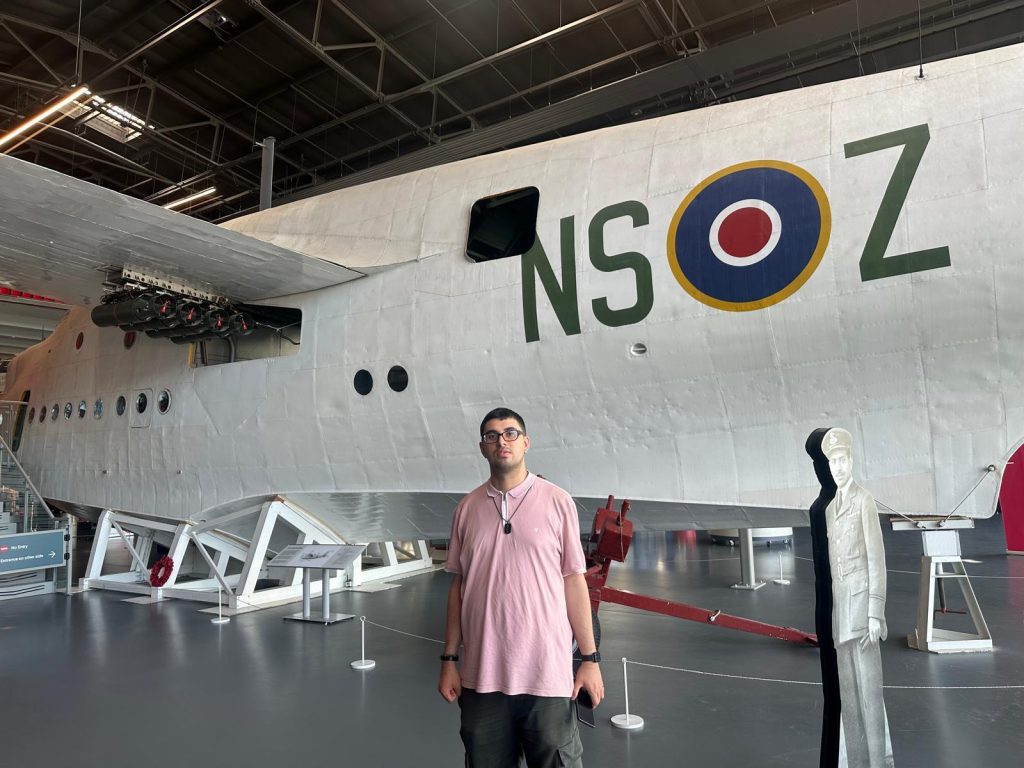
This was the New Zealand war plane includes bullets and missiles. British army used this effectively. Some model pattern human captains are in the plane environment.
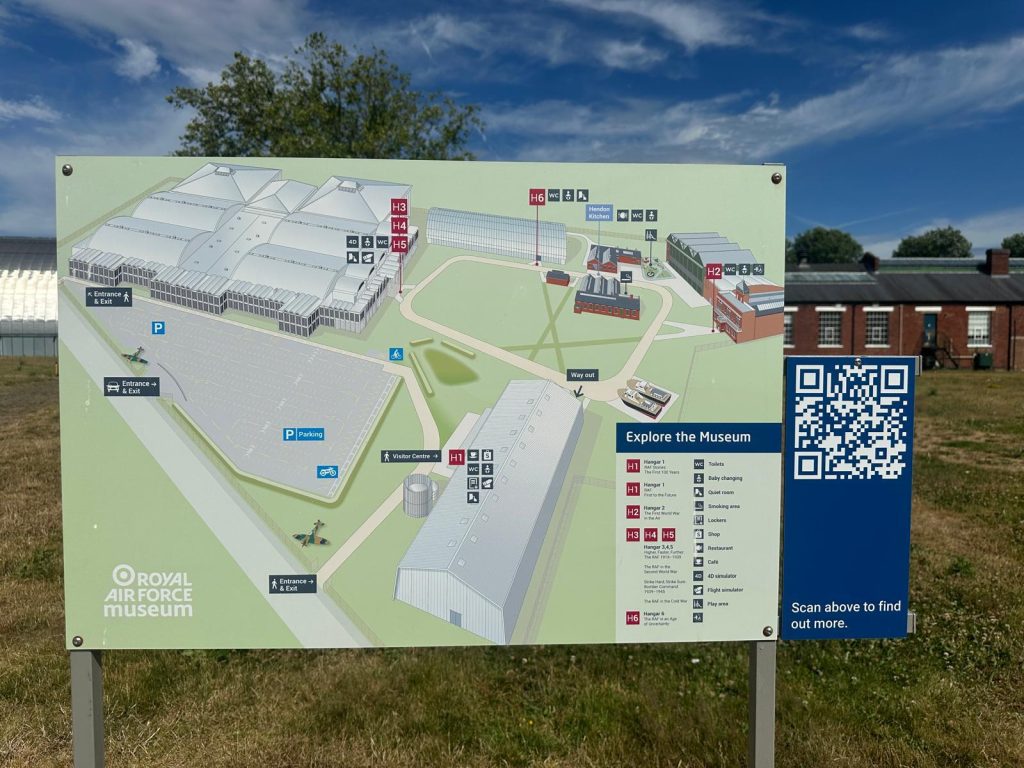
This is the map of all museum. I searched and used this. I was so eager to use this map. Map is full of knowledge and located in the enterence.