

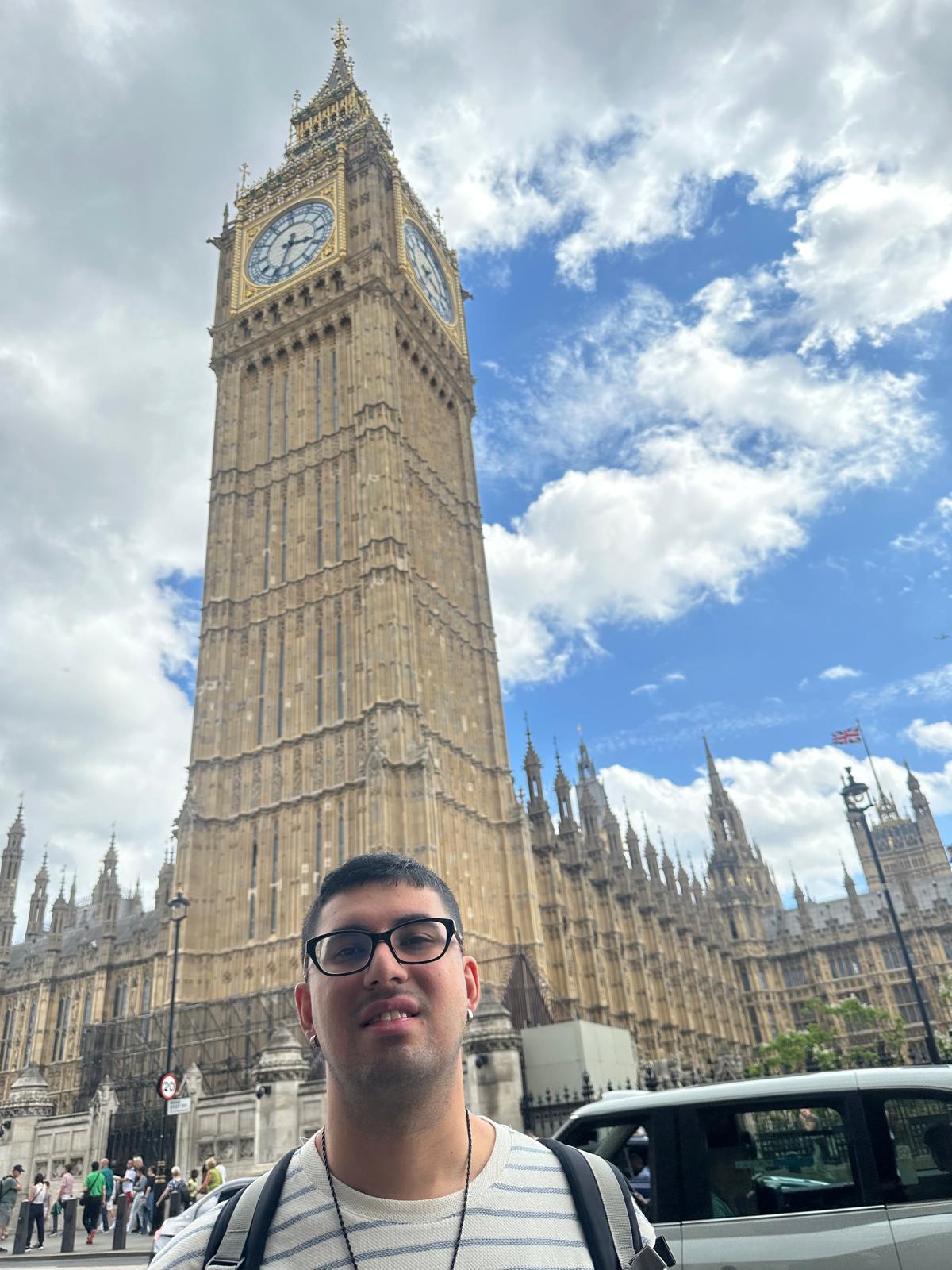

History
- St Thomas’ Hospital traces its origins to around the 12th century, founded circa 1100 as a medieval infirmary.
- It was originally located in Southwark, near St Thomas Street, providing care for the poor and sick.
- In 1215, it operated on that same Southwark site and began building its legacy.
- The hospital was governed by a General Court of Governors and a hospital president representing the City of London.
- In 1551, after being closed during the Reformation, it was refounded and renamed the Hospital of St Thomas the Apostle by Edward VI.
- That same royal re-foundation marked the establishment of its famous medical school.
- Sir Robert Clayton spearheaded a major rebuild between 1693 and 1709, erecting a classical-style hospital with spacious wards.
- Part of the old hospital site still survives today, including the ancient church now housing the Old Operating Theatre.
- In 1862, the hospital vacated Southwark to make way for railway construction and relocated temporarily to Newington.
- From 1865 to 1871, the hospital was rebuilt on its current site in Lambeth; Queen Victoria formally opened it.
- During World War II, it suffered direct bomb hits, including four in just ten days in September 1940, prompting improvised wards and surgery areas.
- In 1859, Florence Nightingale founded her pioneering nursing school at St Thomas’, setting the foundations of modern nursing.
- The Old Operating Theatre Museum & Herb Garret preserves one of the oldest surviving theatres, originally part of the hospital.
- The herb garret was once used to store medicinal herbs, later converted into an operating theatre in the early 19th century.
- That operating theatre lay undiscovered for a century before opening as a museum in 1962.
- Statues at the site commemorate important figures—like Edward VI, who reestablished the hospital, sculpted in 1682.
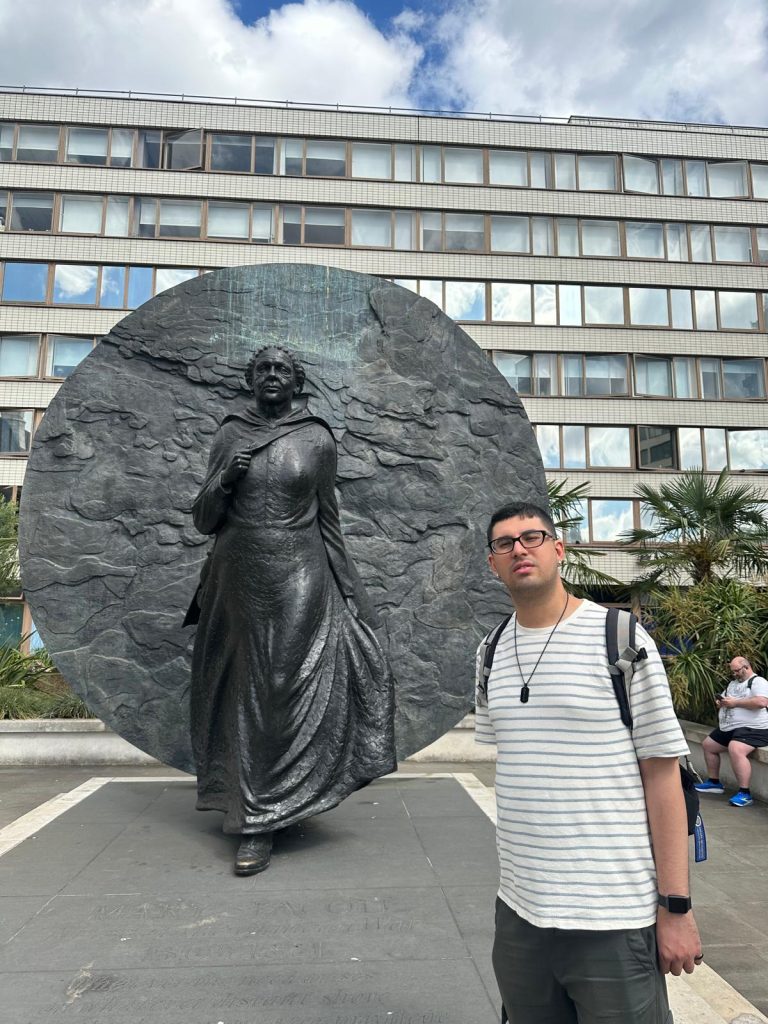
- Another notable statue honors Mary Seacole, unveiled in 2016 and set in the hospital grounds.
- Over the centuries, St Thomas’ evolved from a monastic infirmary into a leading medical institution.
- The hospital has been continuously in service (in one form or another) since the Middle Ages.
- Influential figures in medicine and nursing, like Sir Astley Cooper and Agnes Jones, are associated with St Thomas’.
- Its longstanding governance and charitable endowments provided financial stability during the 18th century.
- The hospital adapted to rapid medical advancements, including being among the first to demonstrate X‑rays in London.
- St Thomas’ also merged with Guy’s Hospital in 1993, forming an enlarged NHS trust.
- Later, it integrated with Royal Brompton and Harefield Hospitals to become a leading heart and lung care centre.
- The Evelina London Children’s Hospital opened on its Lambeth site in 2005, expanding its range of services.
- I went to the St. Thomas’ Hospital,because I have an appointment in there for blood taking. I just examined for check-up and later visited the garden. I really love there because so interesting and fascinating monuments around the hospital. Florance Nightingale is one of these. My family also took a blood test,saw the environment and sat near to the garden. The area was chilling and charming. Lots of people in the hospital and in the garden. The hospital is including one child game machine in the building. I didn’t play it,but I saw how to play.
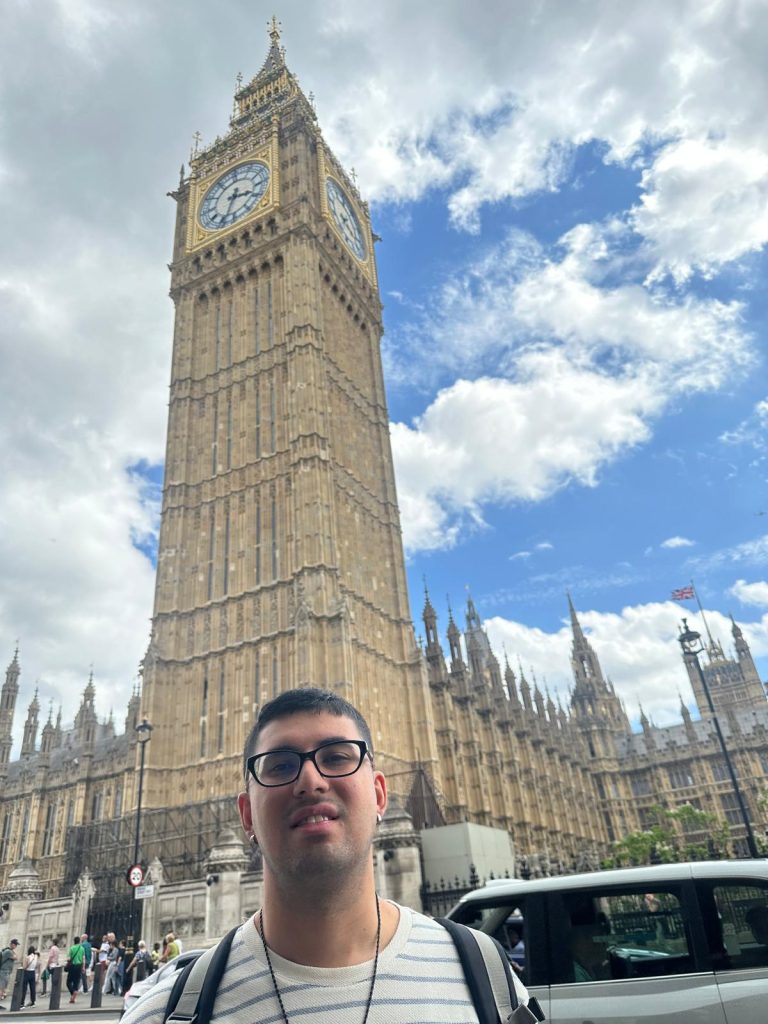
I saw Big Ben Clock Tower again.This picture was taken in front of the iconic Elizabeth Tower, famously known for housing Big Ben. Big Ben is the nickname for the Great Bell of the clock at the north end of the Palace of Westminster in London. Although often used to refer to the clock tower itself, the tower was officially renamed the Elizabeth Tower in 2012 to honor Queen Elizabeth II’s Diamond Jubilee. The tower was completed in 1859, and its famous clock is known for its reliability and accuracy. Big Ben has become one of the most iconic symbols of the United Kingdom and a major tourist attraction. Its chimes are broadcast by the BBC and are recognized around the world. The tower stands over 96 meters (316 feet) tall and forms part of the UK Parliament buildings on the River Thames.
I was standing near the Palace of Westminster, the seat of the UK Parliament.
The weather was so partly cloudy with patches of blue sky, creating a classic London atmosphere.
The clock on the tower shows it’s just after 11:30.
The building behind me showcases the stunning Gothic Revival architecture of the Houses of Parliament.
The British flag can be seen flying high on the right side of the building.
I am wearing a striped shirt, glasses, and carrying a backpack, likely enjoying a day of sightseeing.
Many tourists can be seen in the background, indicating it’s a popular and busy area.
A black taxi and a white van are visible, showing typical London street scenes.
The individual looks happy and relaxed, capturing a memorable moment in the heart of London.
This area is one of the most photographed spots in the UK by visitors from all over the world.
The contrast of the golden clock face against the stone tower adds visual drama to the photo.
I am standing at a good distance to capture almost the full height of the tower.
The historical and cultural importance of this site makes it a must-visit for tourists.
This photo captures a classic “London experience” with one of the city’s most famous landmarks.

I am standing next to the historic Palace of Westminster in London. This is Palace of Westminister.
I am enjoying the beautiful architecture that lines the River Thames.
I am impressed by how detailed and grand the building looks up close.
I am taking in the view of the city skyline in the distance.
I am feeling lucky to be in one of the most iconic places in the UK.
I am wearing a striped shirt and a backpack while exploring the city.
I am standing on Westminster Bridge, a popular spot for photos.
I am noticing how the building reflects centuries of British history and politics.
I am glad the weather cleared up just enough for this great shot.
I am making unforgettable memories on this London adventure.
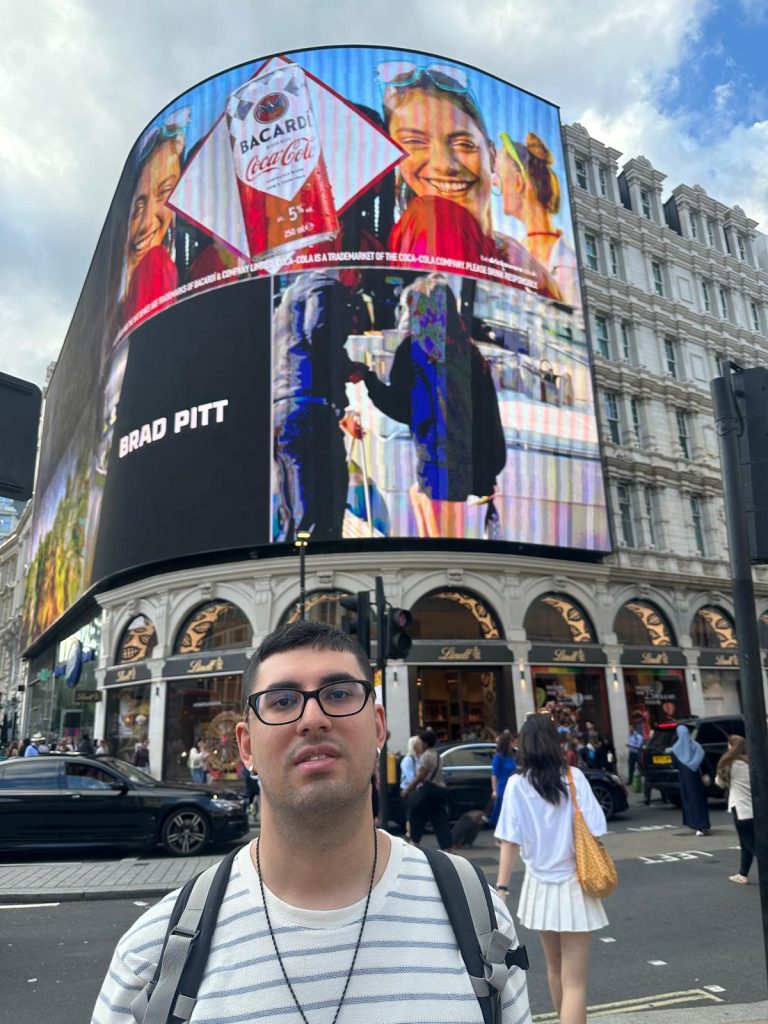
Here is Trafalgar Square and Piccadilly Circus. I am standing near Piccadilly Circus, one of London’s busiest and most iconic locations, known for its massive digital billboards.
I am just a short walk away from Trafalgar Square, a historic public space named after the British naval victory at the Battle of Trafalgar in 1805.
I am surrounded by the energy of central London, with crowds of tourists, locals, and famous shops like Lindt and Boots around me.
I am close to landmarks like Leicester Square, Regent Street, and Covent Garden, all within walking distance from here.
I am enjoying the historic atmosphere that blends with modern advertising and entertainment culture.
I am feeling the pulse of the city, where history, commerce, and people from all over the world come together.
I am amazed by how this area captures both London’s past—with monuments like Nelson’s Column in Trafalgar Square—and its vibrant present.

- I did visit Trafalgar Square during my trip to central London and it was truly impressive.
- I did take several photos near the famous bronze lion statues, which are even more majestic in person.
- I am standing in front of the National Gallery, which houses some of the greatest artworks in the world.
- I am enjoying the vibrant energy of the square, surrounded by people, history, and stunning architecture.
📍 Describing Trafalgar Square and the Area:
- Trafalgar Square is one of London’s most historic and famous public squares, located in Westminster.
- At the center of the square stands Nelson’s Column, a tall monument built to honor Admiral Horatio Nelson’s victory at the Battle of Trafalgar in 1805.
- The column is guarded by four massive bronze lions, sculpted by Sir Edwin Landseer, which symbolize strength and courage.
- Behind the lions and the column is the National Gallery, a grand building filled with world-class European paintings from artists like Van Gogh, Da Vinci, and Monet.
- To the right, you can see St Martin-in-the-Fields, a beautiful 18th-century church known for its classical music concerts.
- The square is a popular gathering place for protests, celebrations, and public events throughout the year.
- With fountains, statues, and historic architecture all around, Trafalgar Square remains a powerful symbol of London’s cultural and political history.